
Short answer: After any discharge, a kitchen hood suppression system has to be serviced and recharged by a qualified technician before it protects your cooking line again. The fire code requires service "after activation of the system," and the protected appliances shouldn't go back into use until the system is restored. Repairs cover the parts that fail between discharges: fusible links, nozzle caps, cartridges, gas valves, cables, and pull stations.
STL Kitchen Suppression is a referral resource, not a contractor. When you send a request, we'll pass it (with your consent) to an independent fire protection provider that serves your area. The provider does the work and gives you the paperwork.
Ansul Recharge After a Discharge: What Happens
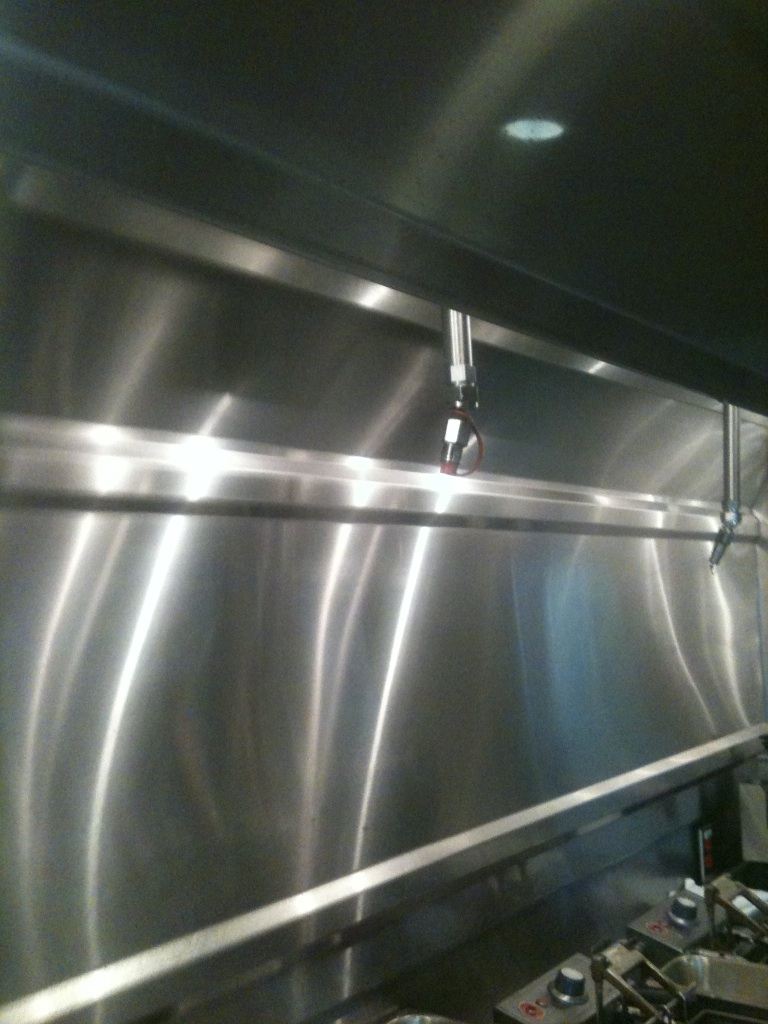
When a wet-chemical system like an ANSUL R-102 fires, a fusible link melts (or someone pulls the manual station), the system shuts off fuel or power to the cooking equipment, and agent discharges through the nozzles into the plenum, duct, and appliances. Once that happens, the tank is empty and the system can't protect anything. ANSUL's owner's guide gives three steps after a discharge:
- Call a trained provider right away to inspect and recharge the system and to find out what caused it to fire.
- Clean the area within 24 hours with warm water and detergent, wearing rubber gloves.
- Rinse and dry everything completely before turning appliances back on.
A post-discharge service visit usually includes more than refilling the tank. Expect the technician to:
- Refill the agent tank and replace the expellant cartridge.
- Install new fusible links (any link that melted or was exposed to the fire gets replaced).
- Clean and inspect the nozzles and fit new blow-off caps, since caps pop off when agent flows.
- Check that the piping and nozzles are clear and still aimed at the appliances they protect.
- Reset the releasing mechanism, then test the manual pull station and the automatic fuel or electric shutoff.
- Update the service tag and give you a written report.
For the full first-day sequence, including cleanup and what to tell your staff and insurer, read what to do when your Ansul system goes off.
Cleanup Coordination
Discharged wet agent mixes with hot grease and forms a foam layer on appliances, filters, and surfaces. Cleanup is usually the restaurant's job, and the manufacturer's advice to clean within 24 hours matters. Before you call a hood cleaning company, ask the suppression provider whether the hood, filters, and duct need attention before or after the recharge. ANSUL also says the system should be inspected right after major hood and duct cleaning, because cleaners sometimes wire fusible links shut to prevent accidental discharge, which stops the system from working automatically. Getting the order of the two visits right saves you a second trip.
Why You Can't Cook Under an Impaired Hood
The automatic system is the primary fire protection for your cooking line. Portable Class K extinguishers are the backup. Until the system is recharged and tested, the hood has no automatic protection, and the gas or electric shutoff that the system controls may not be reset properly. Most fire officials won't let you cook under an impaired system. The City of St. Louis Fire Department cites fire-watch requirements under Ordinance 70796 (the city's 2018 IFC) when fire protection systems are impaired. Other jurisdictions set their own rules, so ask your fire department or fire protection district (the AHJ) what it expects while the system is down.
Components That Fail Between Discharges
Not every repair starts with a fire. Most are found during a semiannual kitchen fire suppression inspection or on a fire marshal's walk-through. These are the parts that come up most often:
| Component | What goes wrong |
|---|---|
| Fusible links | Grease-loaded or corroded links, out-of-date links, or links wired shut after hood cleaning. Metal-alloy links are replaced at least every six months under NFPA 17A/NFPA 96 and manufacturer guidance; some code texts set an annual minimum. |
| Nozzles and blow-off caps | Missing or grease-covered caps let grease clog the nozzle. Nozzles knocked out of aim no longer cover the appliance. |
| Agent tank and cartridge | Cartridge weight or agent level out of limits, corrosion, or a tank past its 12-year hydrostatic test date. |
| Gas shutoff valve | The valve fails to close during the semiannual test, or won't reset afterward. |
| Pull station and cables | Blocked or damaged pull station, frayed or binding cable, damaged pulleys. |
| Electrical interlocks | Shunt trip or reset relay not cutting power to electric appliances, or not resetting. |
If a fire inspector wrote up any of these, the fire code deficiency repair page explains how corrections are documented and reported back.
When the System Won't Reset
By design, the fuel and electrical reset after a discharge is manual. The code doesn't let gas or power come back on by itself. When owners say "the Ansul system won't reset," it's usually one of these:
- The system hasn't been recharged, so the releasing mechanism can't be put back in its ready position.
- A mechanical gas valve has to be reset by hand after the system is restored.
- An electrical reset relay or shunt trip needs to be reset or has failed.
- A fusible link melted or a cable is out of position, so the detection line isn't set.
Don't force a gas valve open or bypass an interlock to get cooking again. Have the technician find out why it fired and restore it properly.
Recharge vs. Repair
A recharge restores a system that has discharged: new agent, new cartridge, new links and caps, reset, and test. A repair fixes or replaces a failed part on a system that hasn't discharged. They often happen together. If a system discharged because of a fault, like a bad link or an accidental pull, the provider should repair the cause as well as recharge.
Sometimes a repair turns into a bigger job. If the system is an older dry-chemical model that isn't listed to UL 300, replacement parts may be scarce, and NFPA 96 calls for bringing a non-UL 300 system into compliance when equipment is no longer supported by the manufacturer. The same applies when appliances have been swapped or moved. In those cases you're looking at an upgrade, covered on the kitchen fire suppression installation page.
What Affects the Price
No two repair bills look alike. The main drivers are the system brand and parts availability, the number of tanks and nozzles, how many links, caps, and cartridges get replaced, whether the agent tank or a gas valve needs replacing, after-hours scheduling, and travel. Ask for an itemized quote. For more on comparing quotes, see what restaurant fire suppression costs.
Questions to Ask the Provider
- Is the technician trained by the manufacturer of my system (ANSUL, Pyro-Chem, Amerex, Kidde, Buckeye, or another brand)?
- Will you find and write down the cause of the discharge?
- Will I get an updated service tag and a written report I can show the fire inspector?
- Do any parts need ordering, and how will that affect when I can cook again?
- In Illinois: is the technician licensed for kitchen systems through the Office of the State Fire Marshal?
Requests are accepted across St. Louis City, St. Louis County, St. Charles County, and the Metro East. In Illinois, the state requires kitchen-system work to be done by an OSFM Class 2K licensed technician working for a Class B licensed distributor; confirm current rules with the Office of the State Fire Marshal. If your system is an ANSUL, the ANSUL system service page covers that brand in more detail.
Sources: ANSUL R-102 Owner's Guide; 2015 IFC §904.12 text; NFPA 96 maintenance provisions (California Mechanical Code extract); Minnesota Dept. of Health kitchen equipment guide; California semiannual wet-chemical report form; Intertek NFPA 96 update notice; St. Louis Fire Department fire watch requirements; Illinois OSFM fire equipment employee license application. Requirements vary by jurisdiction; confirm with your local fire official.