
Short answer: A failed fire inspection gives you a written list of deficiencies and, usually, a correction deadline set by your fire department or district. A qualified provider corrects the suppression items and documents the work, and the fire official decides on reinspection and whether you can keep cooking in the meantime. Send the report with your request so the provider sees exactly what was cited.
What Happens After a Failed Fire Inspection
- Read the report line by line. Note each cited item, the code it references, and the deadline. Ask the inspector about anything unclear before you hire anyone.
- Sort the items. Suppression system items (tag, links, nozzles, shutoffs) go to a fire protection provider. Grease buildup goes to a hood cleaning company. Missing extinguishers, blocked exits, and signage you may be able to handle directly.
- Find out whether the system is impaired. If the system is red-tagged or out of service, ask the fire official right away what is required before you cook again. The St. Louis Fire Department, for example, publishes fire-watch requirements for when fire protection systems are impaired.
- Get the correction quoted and scheduled. Give the provider the report, the system brand, and the deadline.
- Collect the documentation. Keep the provider's written report, the updated tag, and the invoice showing what was replaced.
- Request or wait for reinspection. Some departments reinspect in person; others may accept documentation. Ask which applies to you.
Common Kitchen Hood Suppression Deficiencies
No source ranks violations for Missouri or Illinois, so treat this as a list of items inspectors commonly check, not a "top violations in St. Louis" ranking. Each is drawn from government inspection forms, fire department guidance, or manufacturer manuals.
| Deficiency | Typical correction |
|---|---|
| Service tag missing or older than six months | Full semiannual inspection and a new tag |
| Nozzle blow-off caps missing or coated in grease | Replace caps; clean and re-aim nozzles |
| Appliances moved out from under their nozzles, no wheel stops or floor marks | Return appliances to design position; add a means to keep them there |
| Appliances added, swapped, or changed (for example, a griddle replaced with a fryer) without updating the system | Evaluation and system modification; may trigger a UL 300 upgrade |
| Pre-UL 300 dry-chemical system (large nozzles, no UL 300 label) | Upgrade or replacement when required |
| Fusible links grease-loaded, corroded, out of date, or wired shut after hood cleaning | Replace links and restore detection |
| Gas valve or electrical shutoff doesn't operate on actuation | Repair the shutoff and retest |
| Pull station blocked, tampered with, or unlabeled | Clear access; restore seals; label the protected hazard |
| Grease-producing appliance not covered by the system | Add protection for that appliance |
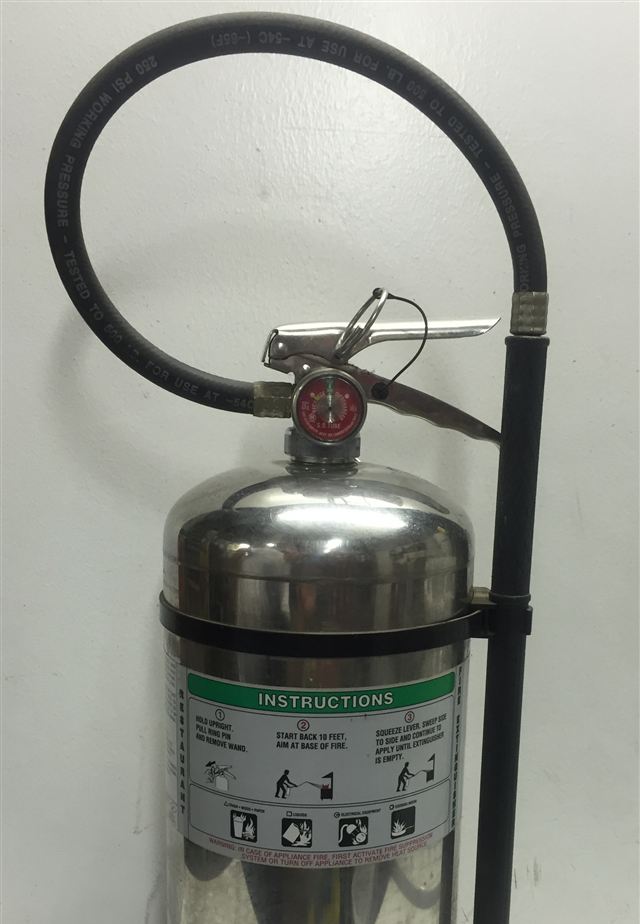
| No Class K extinguisher, missing placard, or blocked access | Mount a Class K within 30 feet of travel; post the placard |
| Filters missing or mesh filters in use | Install UL-listed grease filters with no gaps |
| Hood and duct cleaning overdue or grease buildup | Hood and duct cleaning (a separate service) |
In the 2018 IFC that the City of St. Louis enforces, the suppression requirements sit in §904.12 and hood requirements in §607. Districts on the 2021 IFC use §904.13 and §606, with Class K extinguishers in §906. For a full pre-inspection run-through, use our restaurant fire inspection checklist, and for extinguisher specifics see Class K fire extinguisher requirements.
Red Tags and Whether You Can Keep Cooking
A red tag generally means the system is inoperable or significantly impaired. In Kansas, for example, a red tag is reported to the State Fire Marshal and leads to a stop-cooking order until the system is repaired. Missouri and Illinois jurisdictions handle this locally, so your fire department or district decides whether you can operate, under what conditions, and for how long. We can't tell you whether your kitchen may stay open, and no provider can promise that either. Ask the fire official directly and get the answer in writing if you can.
How Long You Have to Correct a Deficiency
There's no single deadline. It depends on the AHJ and on how serious the item is. An expired tag may get a set number of days; an impaired system may need action before you cook again. Your inspection notice is the controlling document. If the deadline is close, say so in your request so the provider can plan around it.
Reinspection and Documentation
The International Fire Code says suppression inspections are done by qualified individuals and that a certificate of inspection is forwarded to the fire code official. Who sends it varies, so ask the provider whether it files the certificate or whether you deliver it. Keep a folder with:
- The original inspection report and the deficiency notice
- The provider's written service report, listing each item corrected
- A photo of the new service tag, including the fusible link dates
- Invoices listing replaced parts (links, caps, cartridges, shutoff components)
- Class K extinguisher service tags
- The hood cleaning certificate and the label the cleaner leaves on the hood
Some jurisdictions charge a fee when a reinspection or an acceptance test fails; Belleville's permit package is one example. Getting every item corrected and documented before the reinspection avoids a second trip.
When a Deficiency Means a Bigger Fix
Some findings can't be closed with a part. Under the IFC and NFPA 96, replacing cooking equipment, moving it, or changing the cooking medium means the system has to be brought into compliance, and a non-UL 300 system has to be upgraded. Our UL 300 compliance guide explains those triggers. Upgrades and new systems usually need a permit and an acceptance test, and the process differs by area:
- In St. Louis County, Creve Coeur FPD lists hood suppression as a permit type, Clayton requires the permit card and approved plans on site for inspection, and Metro West FPD's local amendment requires wet-chemical systems to be tested by a discharge of agent.
- In St. Charles County, districts such as Wentzville and O'Fallon issue occupancy permits, and Wentzville requires one before a business operates, including after an ownership change.
- In the Metro East, Belleville and Edwardsville permits include an inspector witnessing a wet function test.
That work runs through kitchen fire suppression installation. Smaller fixes, like parts, links, shutoffs, and recharges, go through fire suppression repair. If the cited item is simply an expired tag, the fix is a routine kitchen fire suppression inspection.
What Affects the Price of a Correction
It depends on what was cited: a tag and links cost far less than relocating nozzles or replacing a pre-UL 300 system. Other factors are the number of hoods and nozzles, brand and parts availability, permit and acceptance-test requirements, and after-hours work to avoid closing. See restaurant fire suppression costs for how to compare quotes.
Sources: California semiannual wet-chemical report form; Prosper (TX) Fire, top reasons hood systems fail inspection; Des Moines Fire Dept. kitchen hood maintenance interpretation; ANSUL R-102 Owner's Guide; Minnesota Dept. of Health kitchen equipment guide; Lafayette (IN) Fire Dept. on UL 300; Kansas State Fire Marshal hood suppression maintenance; Kansas SFM Fire Fact 066; IFC §904.12 text; NFPA mobile cooking fact sheet; St. Louis Fire Dept. fire watch requirements; Creve Coeur FPD permit application; Metro West FPD Ordinance 121; Wentzville FPD permits; Belleville FD permit package; Edwardsville fire permit packet. Requirements vary by jurisdiction; confirm with your local fire official.