
Short answer: UL 300 is a fire-test standard for kitchen hood suppression systems. A "UL 300 compliant" system is a model that passed those tests and carries a UL listing. Systems built before the standard took effect on November 21, 1994, usually dry chemical, are generally considered obsolete, and fire codes require them to be brought up to UL 300 when cooking oil, appliances or their positions change, or when the manufacturer stops supporting the system.
What UL 300 Is (and Isn't)
UL 300 is titled "Fire Testing of Fire Extinguishing Systems for Protection of Commercial Cooking Equipment." It was formerly titled "...Restaurant Cooking Areas." It is a test standard, not an installation code. It doesn't tell anyone how to pipe a system or how often to service it. It defines the fire tests a pre-engineered system model has to pass to earn a UL listing for protecting commercial cooking equipment.
That distinction matters when you read sales material. "UL 300 compliant" or "UL 300 listed" describes the system model. Whether your particular installation is right for your appliances is a separate question, answered by the installation standard (NFPA 17A for wet chemical systems), the manufacturer's design manual, and your local fire code. Our guide to NFPA 96 vs. NFPA 17A explains how those pieces fit together.
The fire codes used around St. Louis tie the two together. The International Fire Code says pre-engineered automatic dry- and wet-chemical systems "shall be tested in accordance with UL 300 and listed and labeled for the intended application" (2015 IFC §904.12; the City of St. Louis enforces the 2018 IFC, where suppression is also §904.12, and many St. Louis County and St. Charles County jurisdictions enforce the 2021 IFC, where it moved to §904.13). NFPA 96 likewise requires dry- or wet-chemical systems to be listed to ANSI/UL 300.
The 1994 Change: Why Older Systems Fell Behind
Kitchens changed faster than the old test did. Restaurants moved to low-fat vegetable cooking oils, and fryers became highly insulated and energy-efficient, so oil stayed hotter longer. Those changes made most older dry-chemical agents ineffective on the fires they were meant to stop.
The updated UL 300 test took effect on November 21, 1994. Restaurant systems manufactured after that date must comply with UL 300 to qualify for a UL listing. According to the Fire Equipment Manufacturers' Association, the test got tougher in four ways:
- A real commercial gas fryer replaced a fabricated test pan.
- The preburn time doubled from one minute to two.
- The appliance stays "fuel-on" during the preburn, the way a real fryer would.
- A minimum grease autoignition temperature of 685°F (363°C) was added.
The practical result is that modern UL 300 systems are almost all wet chemical. The liquid agent reacts with hot grease to form a foam layer that helps keep the oil from reigniting, which older dry powder did poorly with vegetable oil.
How to Tell If Your System Is UL 300 Compliant
You don't need to open anything to get a good first read. A city fire department's UL 300 guidance lists these signs of a pre-UL 300 system:
- Dry chemical agent. The tank or label says dry chemical rather than a wet or liquid agent.
- Large nozzles. Dry-chemical nozzles are about 2 inches in diameter. Wet-agent nozzles are roughly ¾ to 1 inch.
- Water-spray protection in place of a listed wet chemical system.
- No UL 300 label on the agent tank or the system cabinet.
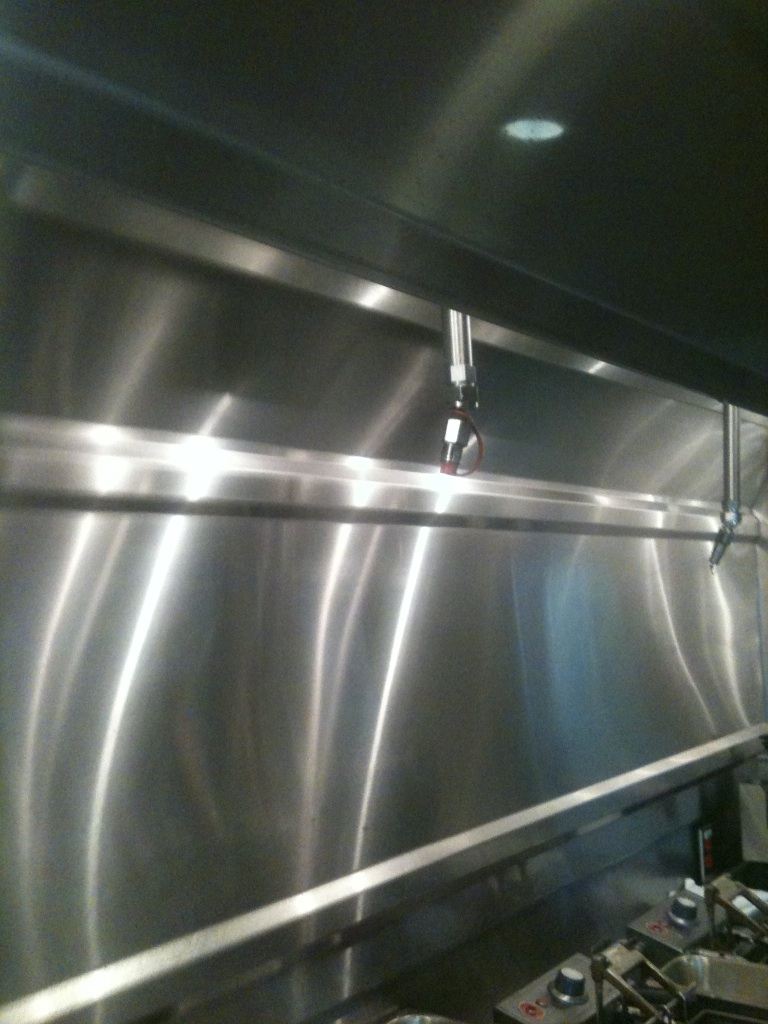
Then check your paperwork. The semiannual service report should record the system manufacturer and model, the cylinder size and the last hydrostatic test date. With the model name you can ask the servicing company directly, "Is this model listed to UL 300?" Common current wet chemical systems such as ANSUL R-102, Pyro-Chem Kitchen Knight II, Amerex KP, Kidde WHDR and Buckeye Kitchen Mister are described by their manufacturers as listed to UL 300.
If the answer is unclear, a semiannual kitchen fire suppression inspection is the right time to ask for a written answer. Ask the technician to note on the report whether the system is UL 300 listed, whether parts are still available, and whether any appliance on the line no longer matches the nozzle layout.
When an Older System Must Be Upgraded
UL does not "unlist" pre-1994 systems. They keep their original listing as long as they still meet it. But the city fire department guidance warns that a "lack of proper replacement parts may mean the UL listing is void." And the codes set clear triggers. NFPA 96 (2021 edition, as quoted in a standards-update notice) says an existing dry or wet chemical system not in compliance with ANSI/UL 300 must be made to comply when:
| Trigger | Example in a real kitchen |
|---|---|
| The cooking medium changes from animal oils and fats to vegetable oils | Switching the fryers from beef tallow or lard to soybean or canola oil |
| The positioning of the cooking equipment changes | Rearranging the line so the fryer sits where the griddle was |
| Cooking equipment is replaced | Swapping a broken range for a new fryer or charbroiler |
| The equipment is no longer supported by the manufacturer | Parts for the old system can no longer be bought |
The IFC has a parallel rule for existing systems: where cooking media, appliance positioning or appliances change, the system must comply with the code's current provisions (2015 IFC §904.12.6.1). The Fire Equipment Manufacturers' Association goes a step further and strongly recommends upgrading a pre-UL 300 system whenever hoods or ducts change, appliances are added, or the manufacturer, an expert, the fire official or your insurer recommends it. Some insurers do require UL 300 compliance, so read your policy too.
Small changes count. Moving a fryer a few feet changes which nozzle covers it. ANSUL's owner's guide tells operators to contact the servicing distributor for a system evaluation before revising the equipment layout. If a remodel or new appliance is on the calendar, plan the kitchen fire suppression installation or upgrade at the same time, not after the fire inspector notices.
Does St. Louis Require Every Restaurant to Be UL 300?
You may see websites state that St. Louis "requires" UL 300 systems in every restaurant. Treat that claim carefully. We could not find a Missouri or St. Louis-area ordinance that sets a blanket UL 300 retrofit deadline for existing kitchens. What the adopted codes do say is narrower: new pre-engineered systems must be tested to UL 300 and listed, and existing non-compliant systems must be brought up to UL 300 when the triggers above occur.
Missouri has no statewide fire code for restaurants, so enforcement is local. The City of St. Louis Fire Department, each St. Louis County fire district or municipal department, and each St. Charles County district can apply its adopted code and local amendments differently. That is why the only reliable answer for your building comes from your authority having jurisdiction (AHJ). Our St. Louis County and St. Charles County pages explain who that is.
Metro East note: Illinois' state fire marshal hood plan submittal form specifically covers "conversion of an existing dry chemical suppression system to a liquid chemical system" and asks whether the system complies with UL 300, NFPA 96 and NFPA 17A. Belleville and Edwardsville permits for a new, modified or upgraded hood system include an inspector witnessing a wet function test. See our Metro East Illinois page.
Questions to Ask Before an Upgrade
- Is my current system model listed to UL 300, and can you show me the listing or label?
- Are replacement parts and cartridges still available for it?
- Does the nozzle layout match every appliance on the line today?
- Can the existing hood and duct stay, or does the upgrade affect them?
- Does my fire department or district require a permit, plan review or acceptance test for this work?
- Is the technician trained by the manufacturer of the new system?
If an inspector has already written up a non-compliant system, our fire code deficiency repair page explains how corrections usually work.
Sources: Lafayette (IN) Fire Department, UL 300; FEMA, Recommended Practice on Upgrading Restaurant Cooking Area Fire Protection Systems; Intertek, NFPA 96 standards update notice; 2015 IFC §904.12 (Lawrence, KS); Minnesota Dept. of Health, kitchen equipment guide; ANSUL R-102 Owner's Guide; City of St. Louis, adopted building codes; Illinois OSFM hood & duct plan submittal form; Belleville FD permit package; Edwardsville fire permit packet. Requirements vary by jurisdiction; confirm with your local fire official.